

Issue 006: Psychedelics, Fast and Slow
Pro: Trips can fit in ketamine clinics. Con: Longer can be better.


PsyDAO is the psychedelic decentralized autonomous organization. We have members around the world using the Ethereum blockchain to promote progress in psychedelic science and art.
This is the Tab, our psychedelic science newsletter. Today, we have a piece by Max De Rosnay, formerly of MIND Foundation, on why short trips are the future, and another from Reilly Capps, self-avowed hippie, who thinks we should try to trip longer. Plus updates from our organization, photos, and music. Enjoy!
Why DMT Fits In Spravato’s Slot
By Max de Rosnay
When Rick Strassman reopened human DMT research in the 1990s, few guessed the “spirit molecule” would become the most clinic-friendly psychedelic.
DMT is intense, fast, and, crucially, brief.
Modern psychiatry already has a working, two-hour, in-clinic pathway thanks to esketamine (Spravato). If a psychedelic can live inside that window, you don’t need to rebuild the health system to use it.
After a slow start, Spravato is moving real volume and building the clinics, training, and reimbursement rules that DMT and 5-MeO-DMT can inherit.
The strongest pull is economical. Room occupancy, clinician minutes, and monitoring drive cost. Short visits are easier to staff and schedule, which means more clinics can offer care (not just expensive centers with spare rooms and big budgets). A predictable take-off and landing is also safer to supervise; if things wobble, they end quickly. You can standardize music, language, and safety prompts across a tight window.
The markets have rewarded short-acting tryptamine programs. Big Pharma validated the two-hour thesis with a massive deal when Abbvie acquired Gilgamesh Pharmaceuticals. Intranasal 5-MeO-DMT has shown rapid antidepressant effects with most patients discharge-ready within the “Spravato window.”
None of that, however, absolves the hard parts. The experience can be overwhelmingly intense, cardiovascular parameters still need watching, preparation and integration still matter, and we don’t yet know whether peak intensity or total exposure best predicts durability across indications.
Now the caveats. Two hours is clinic time, not total care time. It’s like judging a flight by airtime alone; the flight might be 90 minutes, but you still have check-in, security, boarding, and the taxi on the other end.
And ultra-brief, ultra-intense experiences come with their own costs, as they can be harder to integrate for some patients. In other words, short-acting drugs don’t mean lower complexity. So robust training and supervision remain non-negotiable.
Why should we care? Because how these medicines fit into clinics decides who gets them. If the first wave of scalable psychedelics looks like a two-hour visit instead of a day-long retreat, more ordinary hospitals can deliver them. That’s the difference between a promising niche and a real, tangible service.
With that said, short trips certainly won’t replace longer medicines for every patient or indication, but it will get psychedelics out of the lab and into clinics at scale so long as we keep the human work (prep, containment, integration) honest and funded. If the efficacy doesn’t hold up, a shorter visit is just a cheaper disappointment. Build for patients first; let the economics follow.
Speed up Psychedelics? Sure. But Let’s Slow Them Down, Too
By Reilly Capps
Max is right: Short DMT and 5-MeO trips should absolutely be part of the psychedelic future.
At the same time, I worry about an emphasis on speed. The modern world is already all-gas-no-brakes. We live with fast fashion, fast food, fast lanes. We write with AI, over schedule ourselves, and glance at our children between Tweets.
This speed, I believe, is part of why so many of us are sad, anxious and disconnected. Then we try to fix ourselves with even more speedy shortcuts: SSRIs, nootropic supplements, 45 minute workouts.
These quick-fixes are all great and have helped many people. I’m not knocking them. Quick DMT trips will help, too.
Still, let’s also try to find ways to trip … longer. If we want a medicine for the modern world, we should step away for longer.
The most important thing psychedelics do—in medical terms—is open the brain to new ways of thinking, and to new stimuli. Gul Dolen, a researcher in California, found that psychedelics “reopen the critical period of social learning.” What that means is that, as youngsters, our ways of relating to others are shaped by what’s around us. This is true in all mammals. If puppies are beaten and threatened, they never learn to fully trust and love, no matter how much you retrain them as adults. If babies, on the other hand, live in a family and community full of love, connection, and acceptance, the brain and heart form beliefs that we can trust people. The benefits are lifelong: we’ll be more able to make friends, marry, form business partnerships, and so on.
In experiments in adult mice, Dolen showed psychedelics reopen that key growth phase, and the mice became more social.
What’s more, Dolen showed that there is a direct connection between long trips–things like LSD, San Pedro and iboga–and a longer reopening of the critical period.
Now, here’s the crux: as psychedelics reopen the critical period, it’s crucial people be around affection and security. A clinic is a decent place for that, since modern Western medicine is filled with caring people who are concerned for us, aiming for our health, working toward our benefit.
A negative life situation will do the opposite, entrenching the ideas that life is scary and bad, and that they’re bad, too.
“Too often, after having a procedure or treatment, people go back to their chaotic, busy lives that can be overwhelming,” Dolen said in a press release. “Clinicians may want to consider the time period after a psychedelic drug dose as a time to heal and learn, much like we do for open heart surgery.”
There are few things more disorienting than big doses of DMT and 5-MeO-DMT. Like diving to the bottom of the ocean, people need safety stops and sometimes hyperbaric chambers; otherwise they get the bends. Short trips with fast discharge and steady people around them for less time could increase psychedelic downsides: psychosis, depersonalization, derealization, HPPD, grandiosity, mania, and simple confusion.
We already accept that some things just take time. Twenty minutes in a health spa, or 10-minutes of talk therapy, or one afternoon in drug rehab probably won’t break your old unhelpful patterns.
One more thing about Max’s comparison: ketamine and DMT are vastly different medicines. Ketamine takes you away from the world and other people. DMT can bring you toward them. Ketamine is dark. DMT is bright. You can barely move your body on ketamine. On DMT, people thrash. DMT has greater risk of mania and psychosis.
In the end, DMT might not perfectly fit into the ketamine hole, except for time.
If we want psychedelics to be more affordable, there are ways: group trips, churches, peer support. In all of those, we are building places where people on psychedelics can be around people who care about them for long periods–and it hardly costs a dime.
PsyDAO Updates
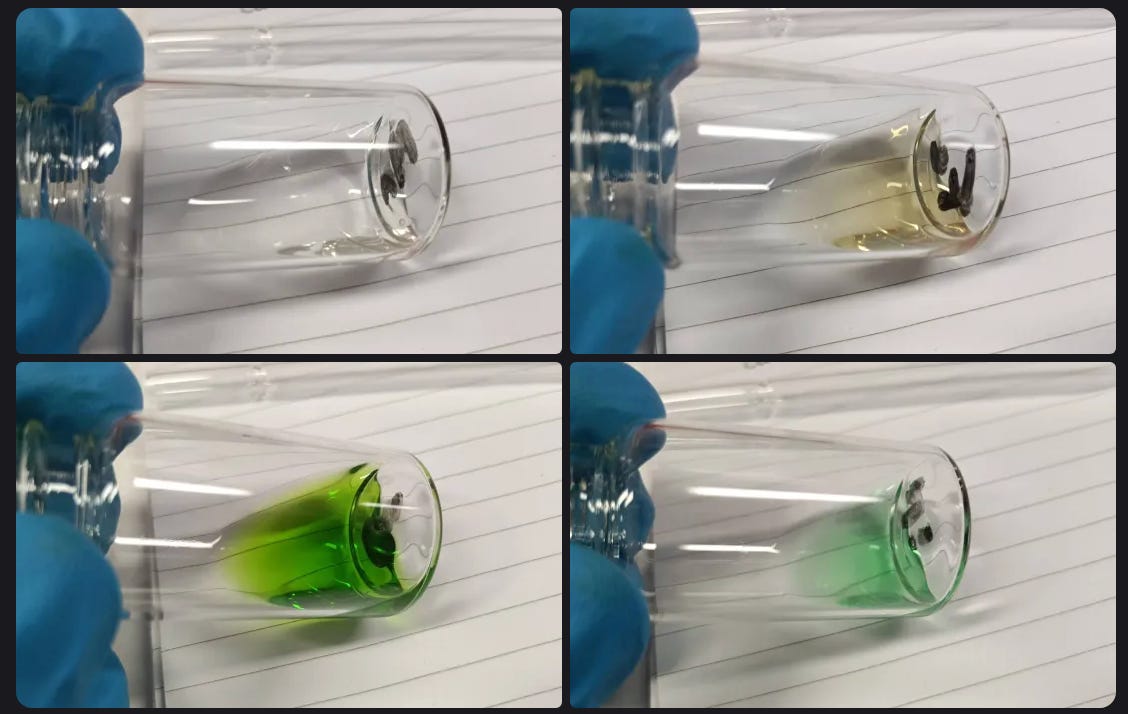
2025 was a solid year for PsyDAO. We cooked things up in Europe, Morocco, the UK, Cyprus, South America, Africa and the US. We’re looking forward to where 2026 will bring us.
Our Science and Community leads Tyler and Brittney chatted with Dennis Walker on a recent Mycopreneur Podcast. Have a listen.
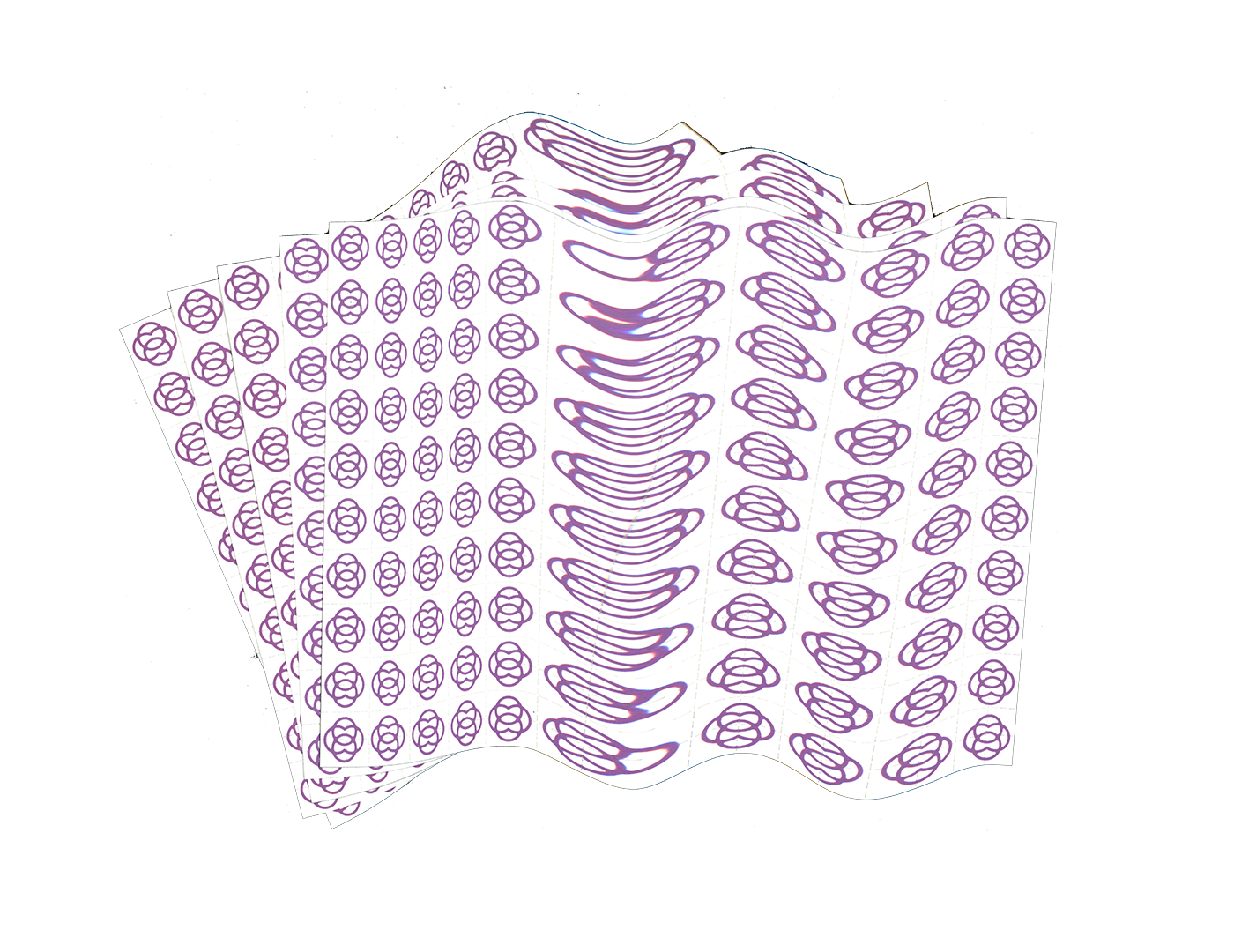
The PsyDAO Genesis Blotter Art just went live in our shop!
We’re looking for more passionate, organized and experienced people to join our team. P/T social media manager & junior designer. Reach out to Brittney at brittney @ psydao.io
Music Therapy
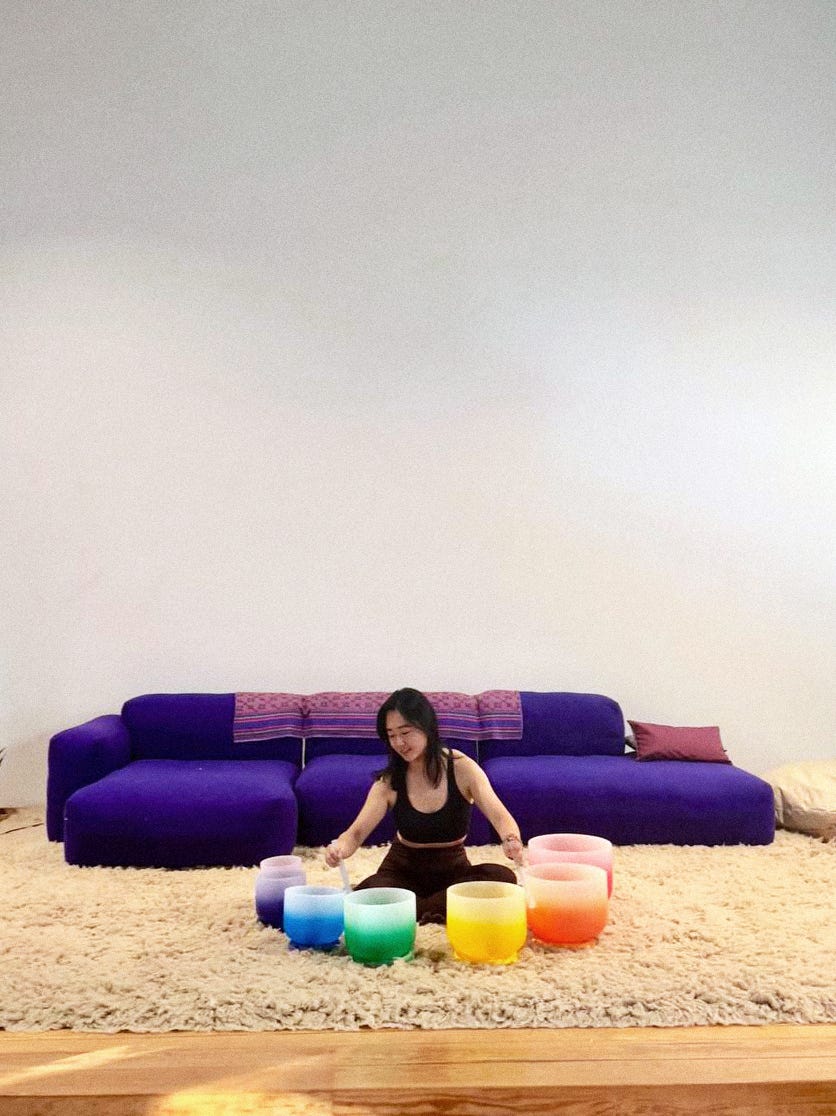
Dongsinne is a French–Korean coach and healer-in-training based between Berlin, Paris, and Seoul. Since 2013, she’s supported everyone from kids to postdocs—then expanded globally as a Taekwondo coach (Gabon), public speaking/speechwriting coach (Paris), and language/interpretation coach (London). She now works as a trauma-informed coach-in-development, weaving sound healing, breathwork, and somatic movement into her practice. We connected with Dongsinne through the DeSci community. She is also currently building DermaDAO, transforming skincare through community-powered research, transparent open trials, and shared ownership of breakthrough discoveries.
This playlist is designed to support breathwork journeys. Let this guide you into presence, regulation, and emotional release through sound. Use it to deepen embodiment, soften the nervous system, and create space for insight, integration, and reset.
Follow Dongsinne on Soundcloud
Thanks for reading! Happy new year!
 | A guest post by
|